

Your California condo client’s board just received its signed balcony inspection report. The engineer recommends repairs to several walkways and identifies one balcony as an immediate threat to residents’ safety. The board now has a signed, dated record of what it knows about those elements. That record shapes what happens if someone gets hurt before the repairs are finished.
When a report like that arrives, it’s the right time to review the association’s condo association liability insurance limits with the board, starting with the excess layer.
What the Law Asks of the Board
So, why does your client have this report in the first place? California Civil Code § 5551 requires it. The current version, amended by SB 410, took effect Jan. 1, 2026. At least once every nine years, the board must have a licensed structural or civil engineer or architect visually inspect a random, statistically significant sample of the association’s exterior elevated elements.
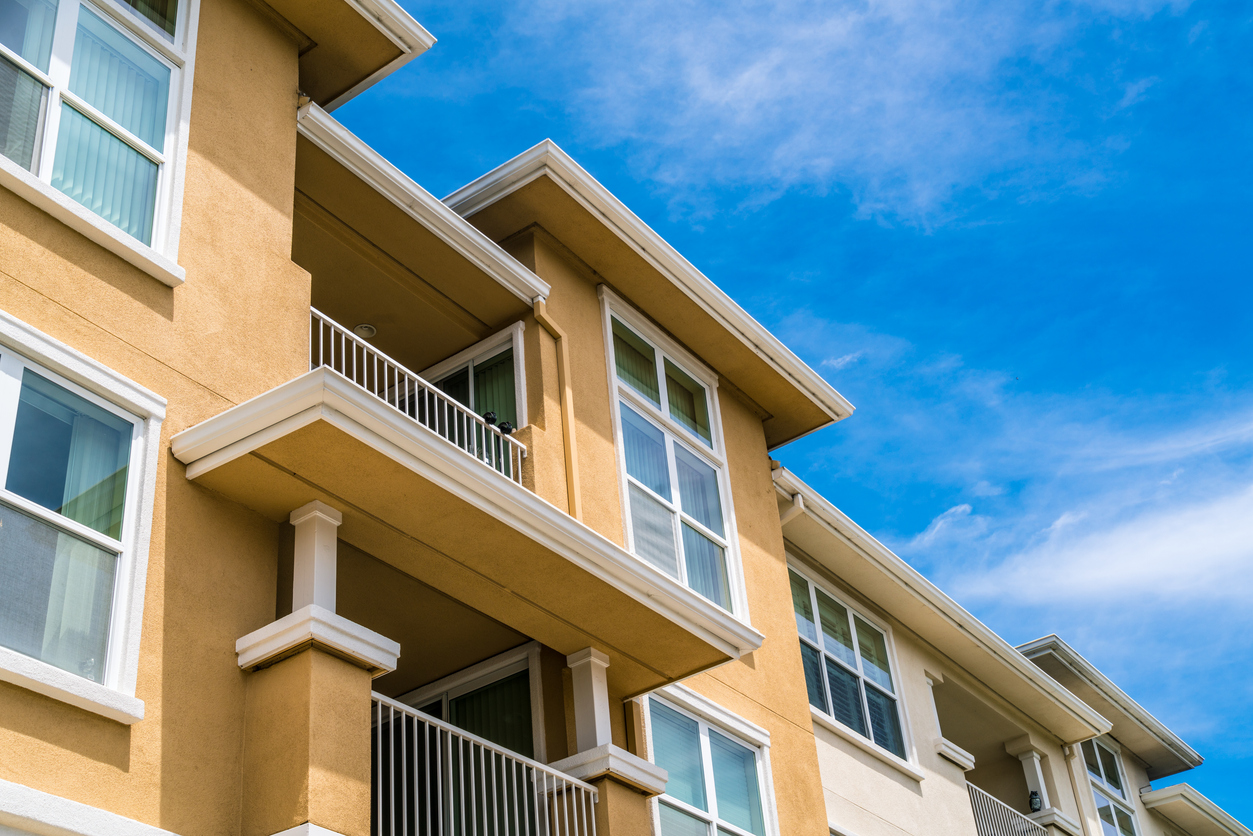
Think balconies, decks, stairways, walkways, and their railings. To qualify, an element must have a walking surface more than 6 feet above ground, and wood must support it in whole or in substantial part. The inspection covers the elements for which the association is responsible for maintenance or repair. Those are the elements where an injury claim would most likely name the association.
Does every condo client need one? No. The law applies only to buildings with three or more attached multifamily units, and it covers condominium projects, not planned developments. Before you discuss the report with a client, confirm that the association falls under § 5551.
Once the inspection is done, the inspector puts the findings in a written report. The report describes each element’s current condition, including whether it poses an immediate threat to residents’ health and safety. It also covers expected future performance, remaining useful life, and recommended repairs or replacements. For you, the report is the clearest list of which elements the association knows need work, and it’s the starting point for any limits review.
Why did California start requiring these inspections? The answer explains why the report belongs in a liability conversation. When a 2015 balcony collapse at a Berkeley apartment building left six people dead and seven injured, the Legislature responded with several laws, including SB 326 in 2019, which created the inspection requirement for condominium associations. Given that history, read the report as a liability document, not only a maintenance record.
Where the Report Goes Next
Once the board has the report, it goes into the association’s financial planning. Under § 5551, the inspector stamps or signs the report and presents it to the board, and the report becomes part of the association’s § 5550 reserve study. The law also requires that the nine-year inspection be conducted in coordination with the reserve study inspection, so that the reserve study reflects the inspector’s findings.
Once a recommended repair enters the reserve study, it gets a cost estimate and a place in the reserve funding plan. For you, the reserve study answers a practical question: When does the association plan to pay for the repair? The answer indicates how long the documented hazard may remain in place.
Want to hear how reserves, insurance, and building inspections connect? Kevin Davis joins Robert Nordlund on Oct. 14 for “Reserves, Insurance, and Building Inspections: How They Work Together,” hosted by Association Reserves. Register for the 11 a.m. or 1:30 p.m. PT session.
The Gap Before the Repair
The reserve study’s funding timeline creates a gap: the stretch between the report date and the finished repair. During that gap, the association is aware of a problem it hasn’t fixed yet.
For immediate-threat findings, § 5551 sets out specific steps. The inspector must give the report to the association as soon as it’s complete and send a copy to the local code enforcement agency within 15 days. The association must take immediate preventive measures, including blocking occupants’ access to the element. Access stays blocked until the local enforcement agency inspects and approves the repairs. Once the board has the report, an immediate-threat element that’s still open means the association hasn’t yet taken a step the law requires.
For findings below the immediate-threat level, § 5551 sets no repair deadline. The walkway repairs from the opening example fall in that category. The association’s documented exposure on those walkways lasts until the repairs are done, however long funding and scheduling take.
With a flagged balcony, here’s how a claim could unfold if the association hasn’t closed it off yet, and a resident or guest falls when the railing gives way:
- The claim: The claimant files a bodily injury claim against the association.
- The record: The signed report shows that the association knew before the injury that the balcony posed an immediate threat. It also shows that the law required the association to block access.
- The argument: A claimant’s attorney could use the report to argue the injury was foreseeable and preventable. That argument could raise the claim’s value.
- The primary layer: The association’s general liability policy may respond to the bodily injury claim, subject to the policy’s terms, limits, and exclusions.
- The excess layer: If the claim exceeds the primary limit, excess coverage may respond above the primary layers for the injury claim.
The excess layer of the condo association’s liability insurance may respond if a resident’s or guest’s covered injury claim exceeds the underlying liability limits. It does not pay to repair the balcony itself. The association may fund the repair through reserves, a special assessment, or financing. The liability limits review and the repair funding plan are separate conversations, and the board needs to address both.
What To Do When the Report Lands
When a client’s report arrives, schedule an excess limits review with the board, and take these steps:
- Read the first page. § 5551 requires the report’s first page to list how many inspected elements pose an immediate threat and how many units they affect.
- Confirm access is blocked. Ask the board to confirm that every immediate-threat element is closed off.
- Check the funding timeline. Use the reserve study to see when the association plans to complete the recommended repairs, so you know how long the gap may last.
- Review limits for the gap. Compare the association’s general liability and excess limits to the size of an injury claim on a flagged element before repairs are done. If the board wants more capacity, KDIS’s excess program offers limits from $5 million to $50 million.
To review excess options for a California condo client, call the KDIS team at (855) 790-7393.
About the Author
Kevin Davis is President of Kevin Davis Insurance Services, Inc. (KDIS) and managing general agent for Travelers Insurance — one of the largest specialty insurance writers for community associations in the United States, currently insuring more than 40,000 associations nationwide. With three decades in the insurance industry — 25 of them devoted exclusively to community associations — Davis brings rare depth of expertise to a highly specialized field. He founded KDIS in 2000 with a two-person team and has since built it into a firm of more than 65 employees, establishing the company as a trusted leader in its market. A nationally recognized authority on loss prevention, Davis writes and speaks regularly on the subject. He also serves as a faculty member for Community Associations Institute (CAI) training programs throughout the country.
About Kevin Davis Insurance Services
For over 35 years, Kevin Davis Insurance Services has built an impressive reputation as a strong wholesale broker offering insurance products for the community association industry. Our president, Kevin Davis, and his team take pride in offering committed services to the community association market and providing them with unparalleled access to high-quality coverage, competitive premiums, superior markets, and detailed customer service. To learn more about the coverage we offer, contact us toll-free at (855) 790 -7393 to speak with one of our representatives.