

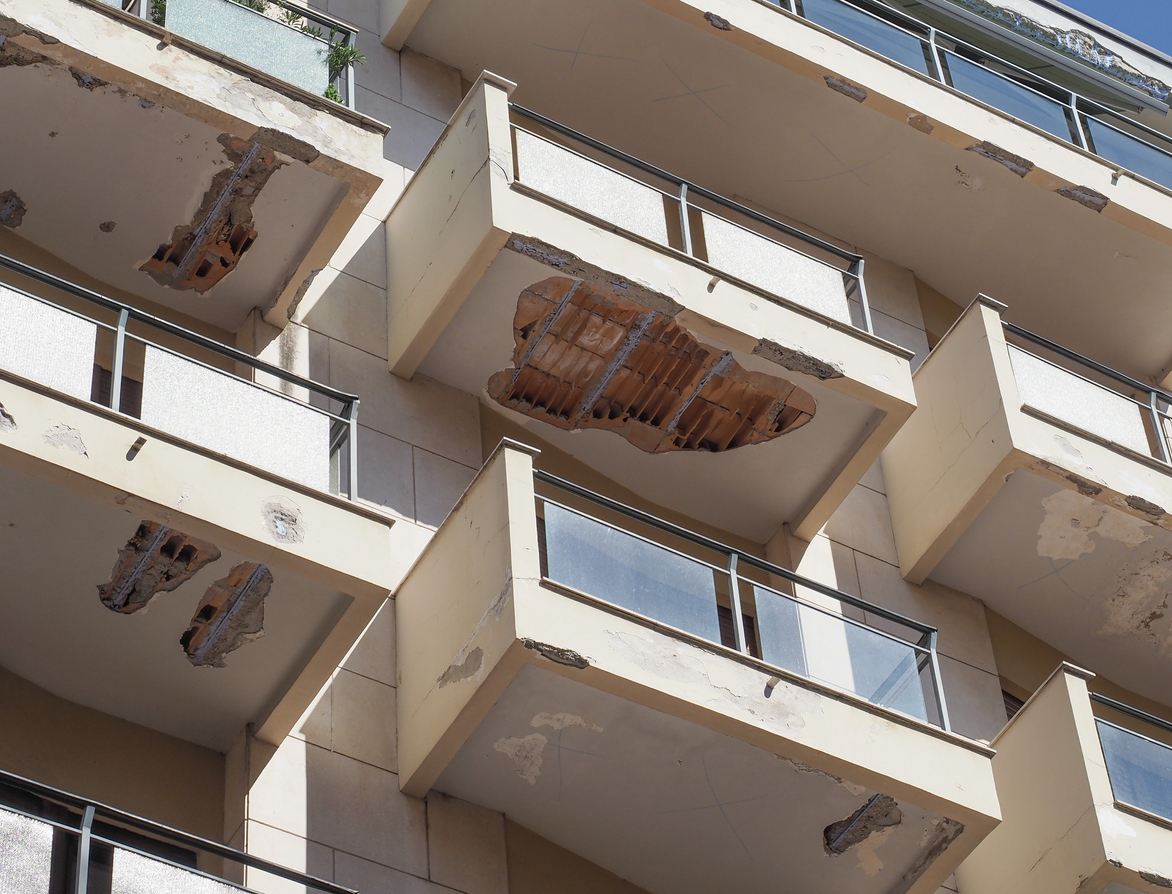
For two years, owners in a condo association have emailed the property manager about balcony floors that feel spongy underfoot. Each year, the board adopts a budget based on its reserve specialist’s latest update, which the specialist prepared without a site visit, and the balcony funding stays the same. Then an engineer’s inspection finds rot in the balcony framing, and the repair cost exceeds what the reserves hold. No one has been hurt, but the board levies a special assessment, and owners sue the directors. The owners argue the board ignored the warnings and left them paying more than earlier repairs would have cost.
The directors’ answer is that they followed their reserve specialist. California and Florida both protect homeowners association (HOA) directors who rely on qualified experts, but only if the directors meet certain conditions. The owners’ attorney will argue the board didn’t meet them. Until a court decides, the directors need a defense, and directors and officers insurance for HOA board members may cover it.
What the Law Lets Directors Rely On
Reliance protection comes from state corporation statutes, so it applies to incorporated associations. In California, Cal. Corp. Code § 7231 governs directors of nonprofit mutual benefit corporations. Subsection (b) entitles a director to rely on reports from three sources: officers and employees; board committees; and counsel, independent accountants, or other persons on subjects the director believes fall within that person’s professional or expert competence. A reserve specialist or structural engineer fits the “other persons” category.
Subsection (c) turns that right into a defense. If a director acted in good faith, used reasonable care, and relied on the expert within the statute’s conditions, owners can’t hold that director liable for allegedly failing to perform board duties, such as through a breach-of-duty claim over a funding decision.
Florida reaches a similar result through two statutes. Section 617.0830 applies to nonprofit corporations, and Section 607.0830 applies to for-profit corporations. Each permits a director to rely on reports from legal counsel, public accountants, or other persons the corporation has retained when the director reasonably believes the subject falls within that person’s professional or expert competence. Under that wording, the protection reaches experts the association hired, such as its own reserve specialist or engineer.
A Florida condo board can fall under either statute. Fla. Stat. § 718.111(1)(a) requires a condo association to be a Florida corporation for profit or not for profit. Whichever form the association takes, its directors have a statutory right to rely on qualified experts.
When Reliance Stops Protecting the Board
In both states, a director can’t rely on an expert’s report if the director knows something that makes relying on it unreasonable. California adds two more conditions: The director must act in good faith and must look into problems when the circumstances call for it. As a result, owners in California can challenge both what the directors knew and whether they followed up. Florida’s reliance provisions don’t add those conditions, but separate subsections of the same statutes require directors to act in good faith and with ordinary care.
Back to the balconies. Each owner’s email provided the directors with information that the specialist’s update didn’t reflect. Because the directors knew about the spongy balconies, the owners can argue that knowledge made relying on an unchanged funding plan unwarranted. The board also didn’t have to wait for the next scheduled study. It could have ordered an inspection when the emails started, and in California, the owners can argue the emails called for exactly that kind of reasonable inquiry. If a court agrees, the directors lose the statutory protection, and the claim proceeds against them on the merits.
How the Level of Reserve Study Shapes the Reliance Record
Whether the specialist’s report reflected the balconies depends partly on the level of study the board bought. CAI’s Reserve Study Standards define four levels of service. The fourth, Preliminary, applies to communities not yet built, so an existing association chooses among the first three:
- Level I, Full: Covers a component inventory, condition assessment, life and valuation estimates, fund status, and funding plan, based on an on-site evaluation
- Level II, Update, With Site Visit: Repeats the Level I tasks based on a new on-site evaluation
- Level III, Update, No-Site-Visit: Involves no on-site visual observations and covers only the life and valuation estimates, fund status, and funding plan
A Level III update skips the condition assessment. The specialist works from experience and information the client provides, so the update reflects the owners’ reports only if the board or manager passes them along. Otherwise, the board holds information its report lacks, which is the gap the knowledge limit addresses.
Even a Level I study has limits. The standards place intrusive testing and structural or safety evaluations outside a reserve study’s scope. Both states allow directors to rely on an expert only on subjects within that expert’s competence. So, a board that answered soft balcony boards with a reserve study alone may struggle to show that the structural question fell within the study’s scope. An engineer’s inspection report fits that question.
Choosing the level of study is also a board decision, so owners can challenge a board that kept renewing Level III updates while residents reported problems.
Where Directors and Officers Insurance for HOA Boards Comes In
Reliance doesn’t keep an owner from suing. When owners challenge maintenance and safety decisions, the directors answer the claim by arguing they relied on their reserve specialist. To rule on that argument, a court needs evidence of what each director knew and when, which means document requests, depositions, and motions. Attorney fees accumulate at each stage. Even if a California court finds that the directors met the statutory standard, the costs of reaching that ruling have already been incurred.
D&O coverage may respond once an owner makes the claim, before any court rules on reliance. A program like the one KDIS offers includes a duty-to-defend feature. The feature provides legal defense for allegations of wrongful acts. Agents placing directors and officers insurance for HOA clients can tell boards that following their reserve specialist strengthens their defense, and D&O coverage may pay to present it. For help placing D&O coverage for an association client, call KDIS at 855-790-7393.
About the Author
Kevin Davis is President of Kevin Davis Insurance Services, Inc. (KDIS) and managing general agent for Travelers Insurance — one of the largest specialty insurance writers for community associations in the United States, currently insuring more than 40,000 associations nationwide. With three decades in the insurance industry — 25 of them devoted exclusively to community associations — Davis brings rare depth of expertise to a highly specialized field. He founded KDIS in 2000 with a two-person team and has since built it into a firm of more than 65 employees, establishing the company as a trusted leader in its market. A nationally recognized authority on loss prevention, Davis writes and speaks regularly on the subject. He also serves as a faculty member for Community Associations Institute (CAI) training programs throughout the country.
About Kevin Davis Insurance Services
For over 35 years, Kevin Davis Insurance Services has built an impressive reputation as a strong wholesale broker offering insurance products for the community association industry. Our president, Kevin Davis, and his team take pride in offering committed services to the community association market and providing them with unparalleled access to high-quality coverage, competitive premiums, superior markets, and detailed customer service. To learn more about the coverage we offer, contact us toll-free at (855) 790 -7393 to speak with one of our representatives.